
Rewiring Digital Retail: Customs De-Minimis Dissolution, Machine Checkout, and Regionalized Supply Networks
An evidence-led analysis of global digital commerce: cross-border fiscal restructuring, the rise of autonomous purchasing software, and the return of physical logistics discipline.
The era of effortless digital arbitrage has come to an end. Global digital commerce in 2026 is defined by a clear operational division: business models relying on cheap cross-border air shipping and tax loopholes face severe margin pressure, while operators with regional European fulfillment, strong customer retention, and structured product feeds are building defensible, profitable brands.
Represents roughly 22% of total retail spend as digital commerce normalizes post-pandemic.
Nearly two-thirds of orders are now placed directly on mobile devices via frictionless one-tap wallets.
Clear restocking policies and fit guidance tools increasingly replace unconditional free returns.
The removal of the €150 duty-free threshold levels the playing field for domestic and regional brands.
The post-arbitrage era: How new customs rules end small-parcel exemptions
For over a decade, many international discount platforms operated with a notable regulatory advantage: the de minimis customs threshold. In the United States (Section 321, permitting duty-free packages under $800) and the European Union (duty exemption on consignments below €150), billions of small parcels bypassed standard import tariffs, handling fees, and local safety checks.
In 2026, that regulatory loophole is closing. The European Union comprehensive Customs Reform has moved to abolish the €150 duty-free exemption entirely, while US regulators have tightened rules on consolidated air shipments of low-cost parcels.
The impact on digital retail is immediate. When an inexpensive $9 item is subject to standard customs duties, handling fees, and European compliance standards, the artificial price advantage of ultra-cheap cross-border shipping fades. The competitive advantage is shifting back to brands that hold stock locally and maintain reliable European fulfillment.
Direct overseas air shipping
- • Individual packages flown one by one directly from overseas factories.
- • High carbon footprint and vulnerability to transport price spikes.
- • Slow and unpredictable delivery times (often 10 to 18 days).
- • Exposure to new customs fees, inspection delays, and administrative surcharges.
- • Inability to process customer returns or restock products locally.
Regional European fulfillment
- • Bulk inventory shipped directly to certified European distribution centers.
- • Fast and dependable 24 to 48 hour delivery to end consumers.
- • Single customs clearance per batch, greatly lowering administrative overhead.
- • Fast local return processing, inspection, and immediate restocking.
- • Full compliance with European consumer rights and traceability standards.
The machine checkout: How autonomous AI agents decouple shopping from browsing
How people shop online is changing rapidly. Purchasing decisions are no longer guided solely by shoppers manually scrolling through endless product pages and category grids.
AI shopping agents and smart browser assistants are beginning to research, compare, and complete purchases on behalf of buyers based on plain-language requests: "Find a durable Merino wool coat made in Europe, confirm it can arrive in Milan before Thursday, and buy the top-rated option under €250."
This shift separates product discovery from traditional web marketing tricks. When an AI agent handles the purchase, artificial urgency popups, countdown timers, and flashy banners carry zero influence.
Winning digital brands adapt by making their product data exceptionally clean and accessible: real-time stock availability, transparent pricing, verified customer reviews, and structured product feeds that smart assistants can read and verify in milliseconds.
Physical logistics: Warehouse automation, nearshoring, and regional hubs
Digital retail is no longer just a marketing and software challenge. Operational resilience depends directly on physical supply chains. Relying on fragile 45-day shipping routes from overseas creates constant inventory delays, customs bottlenecks, and working capital risk.
Growing brands are responding by producing closer to home. Manufacturing hubs across Portugal, Italy, Turkey, and Central Europe have become central to modern retail operations. While factory labor costs may be slightly higher, cutting production turnaround from three months to two weeks allows brands to run leaner inventory, avoid excess unsold stock, and restock bestsellers dynamically.
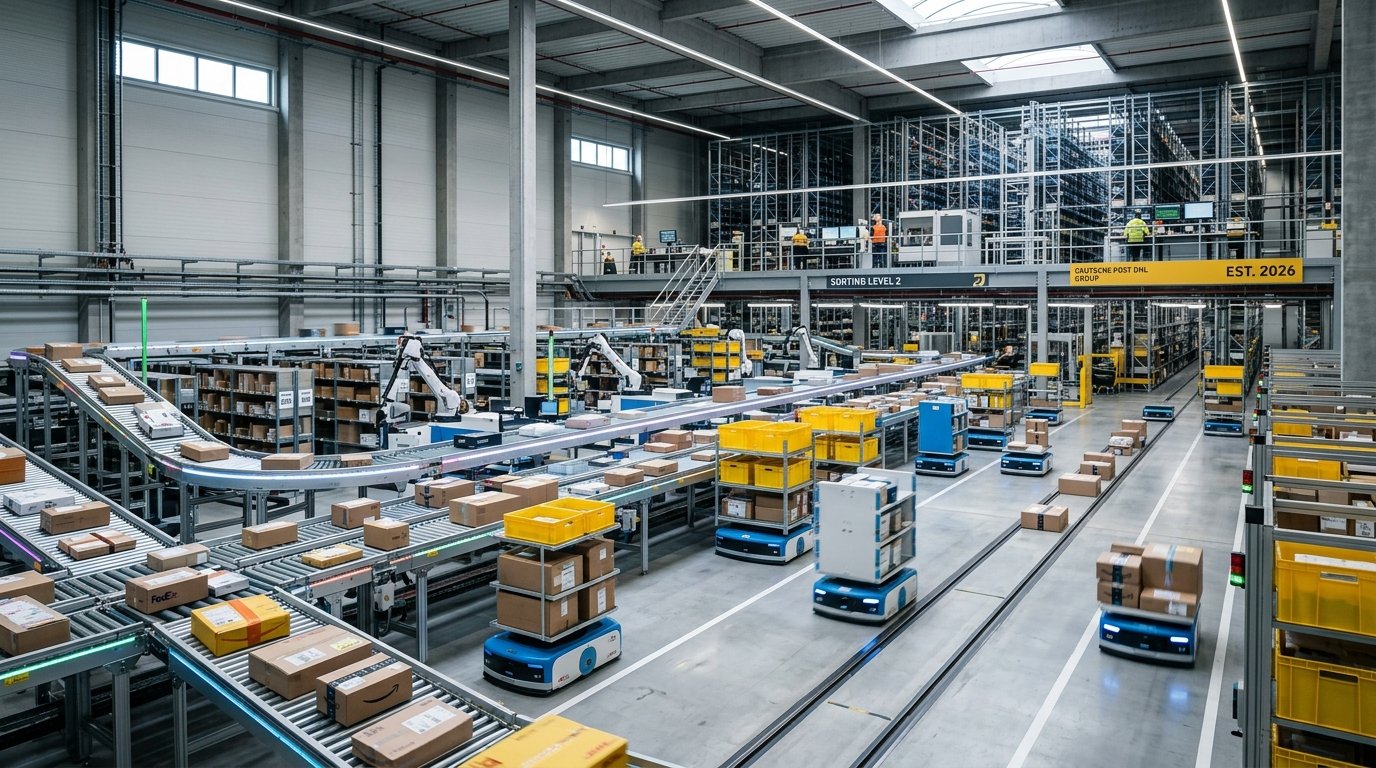
Inside distribution centers, modern warehouse robotics and automated parcel sorting have become accessible to mid-sized businesses. Facilities using modular automation can handle orders faster with significantly lower labor costs per package, allowing independent brand groups to offer shipping speeds comparable to major online marketplaces.
Unit economics under pressure: Focusing on real contribution margins
The days of burning capital just to chase top-line sales without making a profit are over. Digital commerce is now judged on real, grounded unit economics: contribution margin after returns, sustainable acquisition costs, and repeat customer retention.
Advertising costs on major platforms remain high. Brands that rely only on ad auctions and have no direct relationship with their audience end up constantly re-buying the same customers at rising costs.
At the same time, brands are tackling the high cost of customer returns. In fashion and apparel, return rates often reach 25% to 30%. The era of unconstrained free returns has largely ended. Forward-thinking operators are adopting practical solutions:
- Modest restocking fees (typically €3 to €6) on discretionary returns to discourage over-ordering.
- Accurate sizing tools and interactive fit guides on product pages, cutting size-related returns by up to 30%.
- Dedicated post-purchase customer care, helping turn first-time shoppers into repeat buyers.
Our studio approach: Building resilient digital retail brands
In this demanding environment, small standalone brands often struggle under heavy fixed costs: enterprise software tools, compliance requirements, warehouse minimums, and advertising overhead.
This validates our studio model. By sharing core infrastructure (logistics partnerships, data systems, customer service, and growth expertise) across a focused portfolio of brands, we achieve meaningful scale while keeping each brand focused on product quality and customer trust.
At 360Growthlabs, we build for long-term health: zero reliance on regulatory loopholes, direct ownership of customer relationships, reliable European fulfillment, and clean data architectures built for modern commerce.
360Growthlabs Intelligence
Digital Commerce & Supply Practice