

Which channels should you use to generate leads Today?
18/02/2026
Lead generation remains at the core of any strong marketing strategy. However, with so many channels available, it has become harder to know which ones to prioritize depending on your audience, market, and goals.
Today, companies combine inbound and outbound tactics to build acquisition systems that not only attract prospects, but also generate qualified contacts that sales teams can actually use.
In this article, we review the main lead generation channels in 2026, their performance, their strengths, and their limits, based on the most recent data available.
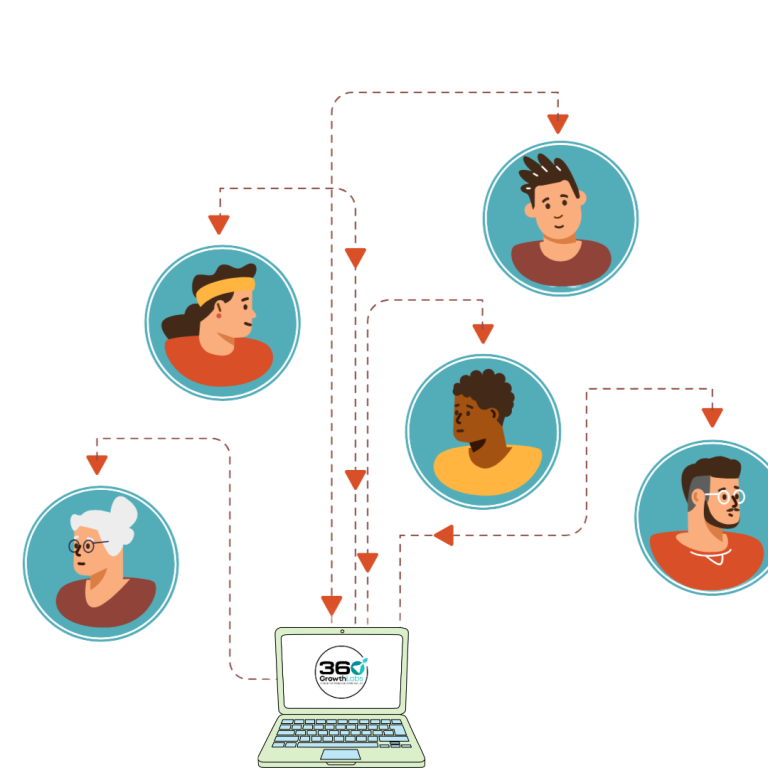
Key lead generation statistics in 2025
Before looking at each channel, a few recent statistics highlight how strategic lead generation has become. Based on data compiled by HubSpot and DemandSage, several key trends stand out:
- Organizations generate an average of 1,877 leads per month according to 2025 data. This reflects the growing ability of companies to capture attention, but it also raises an important issue: lead qualification.
- Lead generation is also ranked among the three most important metrics to measure the success of a content strategy, according to HubSpot’s Marketing Strategy report. Around 70% of marketers believe their leads are “high quality,” which suggests strong confidence in current processes.
- However, 45% of companies report struggling to generate enough leads over the past year, showing that volume is not the only challenge. In addition, 79% of new leads never convert into a sale, highlighting the importance of qualification and nurturing.
- Another key indicator: the average cost per lead (CPL) is around $198 across industries, according to DesignRush. But this varies greatly by sector, from $91 in e-commerce to $982 in higher education.
These numbers show that the challenge is not only generating more leads, but generating leads that can realistically be converted into customers.
1. Google Ads — the best channel to capture existing demand
Google remains one of the strongest lead generation channels, especially when the goal is to capture active search intent. Unlike social media platforms, where people may not know your brand yet, Google Ads allows you to reach prospects exactly when they are searching for a solution.
Key benefits :
Users have high intent: they are actively looking for a solution, not just consuming content. This usually translates into higher conversion rates.
The average Google Ads conversion rate in 2025 is 7.52%, which represents a 6.84% increase compared to the previous year. This shows that well-structured campaigns still perform, even in a more expensive advertising environment.
Google Ads works across many industries, including services, SaaS, insurance, and real estate. Some industries show particularly strong results: automotive repair and services reach a 14.67% conversion rate, pet services 13.07%, and medical practices 11.62%.
2025 performance data :
The average cost per lead (CPL) on Google Ads is $70.11 according to WordStream. However, this varies significantly by industry: legal services show a CPL of $131.63, while automotive repair and services can generate leads at only $28.50.
The average click-through rate (CTR) reaches 6.66% across industries, with sectors such as arts and entertainment exceeding 13%.
(Source: https://terrahq.com/blog/google-ads-benchmarks-2025/)
These numbers confirm that when properly optimized, Google Ads can generate leads at a reasonable cost with strong purchase intent.
recent articles:


Follow us
Follow us to discover more stories, tips, and daily inspiration!
If you’ve got an idea that won’t let you rest, we’re ready to help. Contact us on WhatsApp, and let’s talk about how we can bring your vision to life with our full range of services.
2. Meta (Facebook & Instagram) — capturing attention and creating demand
Meta platforms do not rely on search intent like Google. Instead, they help create demand, especially for B2C audiences or broad target groups.
Meta is excellent at product and service discovery for people who are not actively searching, but who can be captured through relevant content.
Benefits :
Meta offers extremely precise demographic and behavioral targeting, allowing marketers to reach highly specific segments. Its wide range of formats (videos, carousels, stories) makes it ideal for storytelling and brand building.
Meta is particularly effective for offers with strong emotional appeal or high perceived value. For example, some data suggests video campaigns can increase conversion rates by 33%.
2025 statistics :
According to HubSpot, 68% of marketers say social media helps them generate leads. Social media was also ranked as the most effective channel for acquiring high-quality leads by 44% of surveyed companies.
Facebook and Instagram campaigns can outperform average benchmarks when integrated into structured conversion journeys using retargeting and nurturing. Meta is especially relevant for awareness and top-of-funnel strategies, which later connect to remarketing.
It is also worth noting that TikTok is rapidly gaining ground, with 67% of marketers planning to increase spending on the platform.
3. LinkedIn — the leading channel for B2B lead generation
LinkedIn has become the most effective channel for B2B lead generation, especially for complex offers or longer sales cycles. It is the platform where decision-makers are active.
Key facts :
The numbers are clear: 89% of B2B marketers use LinkedIn to generate leads, and 62% say it actually produces leads for them. Even more impressive: LinkedIn is responsible for 80% of all B2B social media leads.
(Source: https://sopro.io/resources/blog/linkedin-lead-generation-statistics/)
LinkedIn Lead Gen Forms are one of the platform’s strongest tools. These native forms convert at around 13% on average, far higher than the 2.35% conversion rate of external landing pages.
Why it works ?
LinkedIn offers pre-filled forms that reduce friction and boost conversions. Users do not need to leave the platform or manually type their information: data is automatically pulled from their LinkedIn profile.
The professional environment also increases trust and lead quality. People on LinkedIn are in a business mindset, making commercial interactions more natural and better accepted.
According to Sopro, for targeted B2B campaigns, LinkedIn’s cost per lead is 28% lower than Google AdWords. In addition, LinkedIn leads convert 277% better than Facebook leads for B2B.
LinkedIn is often the first choice for B2B companies targeting executives, directors, and other high-value profiles.
4. Email marketing — still one of the most effective channels
Despite constant changes in advertising platforms, email marketing remains one of the most effective levers, especially for nurturing leads that have already been acquired.
It is the preferred channel for 78% of companies for lead generation.
2025 data :
Email marketing ROI remains exceptional: for every $1 spent, marketers receive an average of $36 in return, representing a 3,500% ROI.
(Source: https://www.emailtooltester.com/en/blog/lead-generation-statistics/)
According to MarketingLTB, average open rates are around 26.76%, but they vary strongly depending on the email type. Welcome emails show an exceptional open rate of 63.91%, while RSS emails reach 45.54%.
Segmented email campaigns generate 760% more revenue than non-segmented campaigns. Automated drip campaigns can generate up to 80% more engagement.
How to use it?
Modern email marketing is built around three pillars: automation, segmentation, and personalization. Combining automation with strong segmentation makes it possible to send the right message at the right time.
Newsletters combined with educational content build trust over the long term. Smart follow-ups move leads through the funnel without being intrusive.
Even though email is often seen as a “post-lead” channel, it plays a critical role in turning a lead into a qualified opportunity. A personalized subject line can increase open rates by 22%, and plain-text emails often convert better than complex HTML emails.
5. Content marketing and SEO — long-term organic leads
According to DemandSage, content remains one of the strongest long-term lead sources, especially when aligned with search intent. Content marketing is used by 82% of marketers to generate leads.
Key data :
- Content marketing generates three times more leads than traditional outbound marketing while costing 62% less.
- SEO has a closing rate of 14.6%, compared to only 1.7% for outbound tactics. Organic SEO leads are often seen as the most qualified because they reflect active search intent.
- According to Semrush, 49% of marketers say organic search provides the best ROI. Companies that publish regularly on their blog generate up to 67% more leads than those that do not.
Why it is powerful ?
Content marketing combines SEO with sustainable traffic. A well-ranked article can generate leads for months or years after publication, unlike paid ads that stop working when the budget runs out.
Content also educates prospects and personalizes their journey. By creating content for each funnel stage, you naturally guide prospects toward conversion.
6. The multi-channel approach: the only viable strategy in 2026
The data is clear: no single channel can ensure stable and sustainable lead generation in the long term. Buying behavior has evolved, journeys are more fragmented, and prospects now interact with multiple touchpoints before making a decision.
Why multi-channel matters
Multi-channel marketing campaigns show a 31% lower cost per lead compared to single-channel campaigns. This data from Sopro, based on their State of Prospecting research, highlights the economic advantage of this approach.
The best-performing lead generation strategies are therefore built on a structured multi-channel approach. In practice, this means combining channels intelligently depending on their role in the buying journey.
The best channel combinations
Meta (Facebook and Instagram) is excellent for creating interest, capturing attention, and reaching broad audiences at the top of the funnel. These platforms are ideal for discovery and awareness.
Google Ads and SEO capture active search intent. When prospects actively look for a solution, you need to be visible on search engines.
LinkedIn is perfectly positioned for targeting qualified B2B profiles and decision-makers. It is the best channel for reaching people with buying power.
Email marketing and automation take over to nurture the relationship and move leads forward in the funnel. This is where a lead becomes a true sales opportunity.
Real-world benefits
A multi-channel approach increases the number of touchpoints with the same prospect. A B2B buyer now interacts with 6 to 10 stakeholders before making a purchase decision, according to Sopro.
It also reduces dependency on a single channel, lowering risk from algorithm changes or rising advertising costs. If Google raises prices or Facebook changes its algorithm, other channels continue to deliver.
Finally, it reflects real buyer behavior. Prospects rarely convert after one interaction. In practice, someone may discover your brand on Instagram, search on Google a few days later, visit your website, and finally convert after an email follow-up or a retargeting campaign.
This channel complementarity is what makes lead generation scalable. Companies combining outbound and inbound generate 73% more leads than those focusing on a single approach.
The central role of lead qualification
Generating leads is only the first step. A lead has value only if it is relevant, qualified, and usable by your sales team. Without qualification, even a high lead volume can become counterproductive.
The qualification challenge
Sales teams ignore 48% of leads they receive from marketing. This highlights a major alignment problem between marketing and sales, often caused by poor qualification.
Only 15% to 25% of inbound leads are truly sales-ready. Most require nurturing before being passed to sales.
Companies that excel in lead nurturing generate 50% more sales-ready leads while reducing acquisition cost by 33%.
How to qualify leads effectively
Qualification helps filter truly interested contacts, prioritize high-potential prospects, and avoid overwhelming sales teams with irrelevant leads.
It usually relies on multiple complementary methods. Lead scoring analyzes behavior, engagement, and declared criteria to assign a score to each lead. Companies using lead scoring improve their closing rate by 30% to 70%.
Smart forms with qualification questions filter leads from the start. Behavioral analysis (pages visited, interactions, time spent) reveals real intent. Marketing automation helps segment and nurture leads before they are transferred.
Why speed matters
Responding to a lead within 5 to 10 minutes increases contact rates by 900%. On the other hand, calling a lead after 30 minutes reduces closing probability by 80%.
Nurtured leads also make purchases that are 47% larger than non-nurtured leads. This shows that investment in qualification and nurturing directly translates into higher revenue.
A strong lead generation strategy is therefore not about generating the most leads possible, but about generating the right leads, at the right time, through the right channel.
Conclusion: toward smarter lead generation
In 2026, effective lead generation relies on three pillars: a controlled multi-channel strategy, rigorous qualification, and constant performance measurement.
Channels like Google Ads, Meta, LinkedIn, email marketing, and content marketing all play a role in a strong acquisition ecosystem. Their complementarity is the key.
Google Ads captures immediate intent with an average conversion rate of 7.52%. LinkedIn dominates B2B with native forms converting around 13%. Content marketing delivers the best cost-efficiency, generating three times more leads than traditional outbound marketing at 62% of the cost.
The goal is no longer to generate the maximum number of contacts, but to create a consistent flow of qualified prospects that sales teams can convert efficiently. Companies aligning marketing and sales generate 32% more revenue.
This combination of multi-channel execution and strong qualification is what turns lead generation into a true business growth lever. The data clearly shows that companies adopting this holistic approach outperform competitors, both in lead volume and in lead quality.
🔗 Other articles for further reading
- The 5 common mistakes entrepreneurs make in digital marketing and how to avoid them : Boost your e-commerce with a winning digital strategy: SEO, AI, social commerce, and customer loyalty.
How AI is revolutionizing trend analysis in fashion : Discover how artificial intelligence is transforming trend detection and creationd
Common mistakes new fashion brands make and how to avoid them : Avoid pitfalls that compromise your brand launch
How to Make Your Fashion Brand Stand Out ? : Differentiation strategies in a saturated market
If you’ve got an idea that won’t let you rest, we’re ready to help. Contact us on WhatsApp, and let’s talk about how we can bring your vision to life with our full range of services.